

By 11 November, Wildwood had taken $43.3 million in North American cinemas. That is more than two and a half times what Laika’s previous film, Missing Link, took there in its entire run, and it is the best news a stop-motion studio in Oregon has had in seven years.
Worldwide, by the count of The Numbers, a box-office tracker, it stands at about $56 million. By the rule of thumb the film trade uses, it needs about $250 million to pay for itself in cinemas.
So who makes up the difference? As it happens, a man who sells trainers.
Laika is the animation studio in Hillsboro, Oregon, more than 800 miles from Hollywood, that made Coraline in 2009 and four features since: ParaNorman, The Boxtrolls, Kubo and the Two Strings and Missing Link. Every one of them was nominated for the Oscar for best animated feature, and none has won. Its puppets and sets are built by hand, moved by hand a fraction of an inch at a time, and photographed one frame at a time. That is stop-motion, and it is about the slowest way yet devised to make a moving picture.
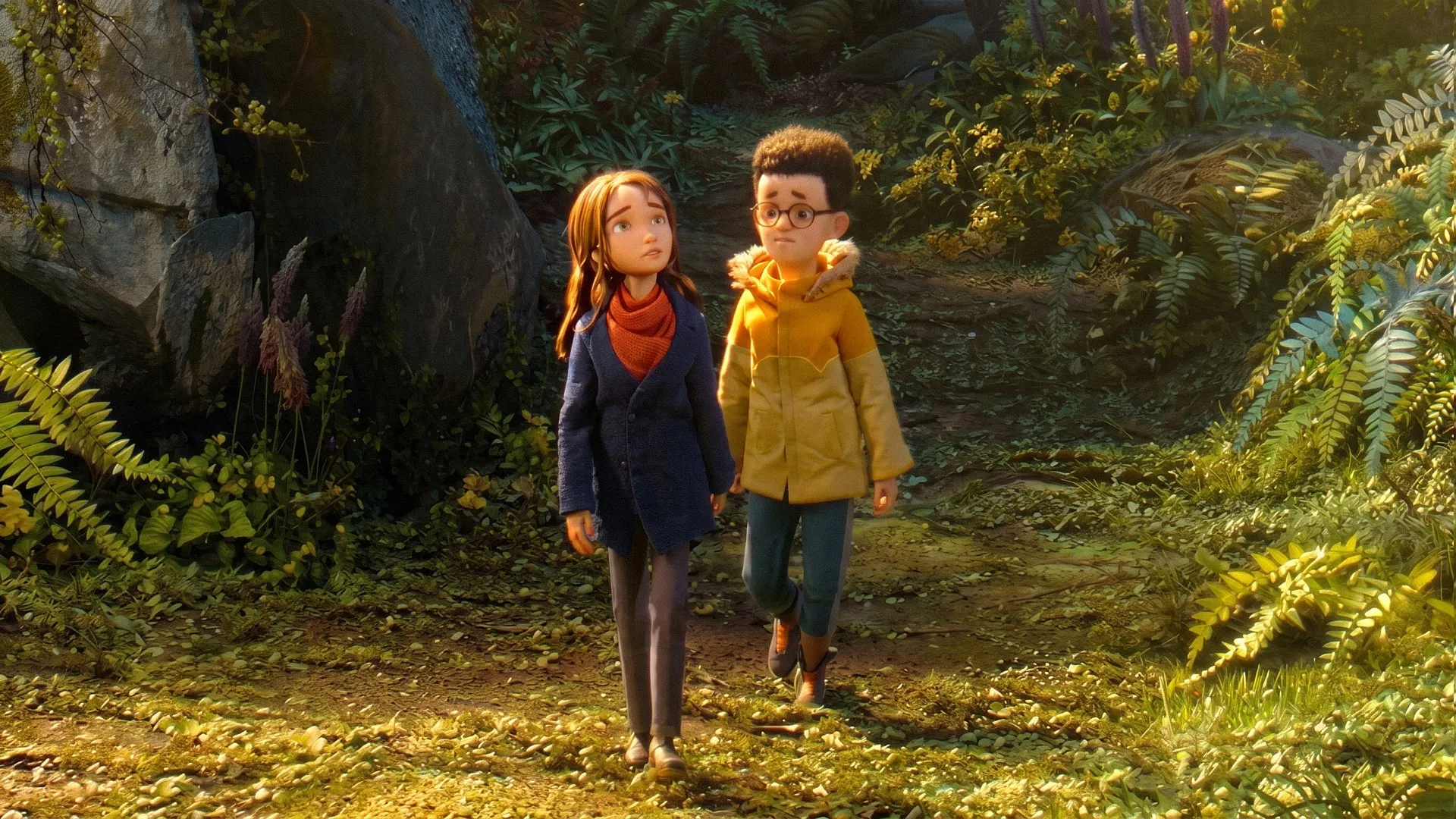
Wildwood is adapted from the 2011 children’s novel by Colin Meloy, the singer of the Portland band the Decemberists, and the illustrator Carson Ellis. A Portland girl called Prue McKeel follows a flock of crows that has carried off her baby brother into the Impassable Wilderness at the edge of town, and finds a forest at war. Travis Knight directed it from a script by Chris Butler, with Carey Mulligan, Peyton Elizabeth Lee, Jacob Tremblay, Angela Bassett, Tom Waits and Mahershala Ali among the voices. It runs 132 minutes, which makes it the longest stop-motion feature ever made, and it is Laika’s first film to be rated PG-13.
The critics adore it. Rotten Tomatoes counts 97 per cent of 180 reviews as positive, and audiences polled by CinemaScore on opening night gave it an A. Robbie Collin, the film critic of the Telegraph, wrote: “I am not sure I have ever seen a stop-motion film this intricate or lavish, nor am I sure I ever will again.”
The audience has been loyal, too. Wildwood opened third on 23 October with $12.3 million across 2,815 cinemas, then fell by only 27 per cent the next weekend and 20 per cent the one after. Plenty of films lose half their audience in a weekend.
The bill
Laika does not say what Wildwood cost. The figure widely reported, and listed by The Numbers, is $100 million, which is more than some of this year’s computer-animated features from much larger studios.
Here is where it went. The production built 136 sets and 231 puppets. Each change of expression is a separate 3D-printed face swapped onto the puppet, a box of twenty-four faces for every second of film, and Wildwood used 140,000 of them, beating the 106,000 that won Missing Link a Guinness record. A single golden eagle, a character called the General, took some 3,000 hours to make.
Brian McLean, a visual effects artist at Laika, put the business case to a reporter from Inverse in September. “We don’t do this because it’s faster. We don’t do it because it’s cheaper. We don’t do it because it takes less people.”
I have read a great many business plans in my time, some of them before their owners had finished writing them, and that is the first I have seen that opens with all three reasons not to invest.
Now the arithmetic. A cinema keeps roughly half of every ticket, and a film’s budget does not include the cost of advertising it, which is why the trade reckons a film must take about two and a half times its budget before it is clear. Let’s run Laika’s record through that rule:
- Coraline (2009): made for $60 million; $188.3 million worldwide, including $52.4 million from a fifteenth-anniversary rerelease in 2024
- ParaNorman (2012): $60 million; $109.2 million
- The Boxtrolls (2014): $60 million; $111.9 million
- Kubo and the Two Strings (2016): $60 million; $77.5 million
- Missing Link (2019): $100 million; $26.6 million
One film in five clears the bar, and Coraline only did it with a second run in cinemas fifteen years after its first.
To be fair to the films, cinemas are not the whole of it. Home video, television and streaming bring money in for years, and Laika is a private company that publishes no accounts, so nobody outside it can say what each film finally earned. But a studio whose cinema returns look like that does not go seven years between films, as Laika did after Missing Link, on cinema returns.
The patron
Phil Knight, who co-founded Nike, is worth roughly $26 billion by Forbes’s running estimate. In 1998 he took a stake in Will Vinton Studios, a Portland animation house, at about the time his son Travis went to work there as an animator. By 2002 he was the majority owner, and the following year Will Vinton, the founder, was out. In 2005 the studio was renamed Laika, after the Soviet dog that went into orbit in 1957, and hired Henry Selick to direct Coraline. In 2014 it spun off its advertising work to concentrate on features.
Phil Knight is Laika’s chairman. Travis Knight is its president and chief executive. He has directed Kubo, the Transformers spin-off Bumblebee, this year’s Masters of the Universe, which did poorly at the box office, and now Wildwood. He has sat on Nike’s board since 2015.
Jake Coyle of the Associated Press, visiting in September, put the question gently: “And it’s easy to wonder if Laika could have kept such long-term productions going without the Knight family wealth.” The list above answers it.
Is that a scandal? Not in the least. Handmade work has always needed somebody with deeper pockets than the person making it. When I was eleven I spent a week carving a figurehead for a bargeman in Cinderhythe, who admired it enormously and paid me in admiration, and I learned more about the economics of art that week than in all the years since. The trick is finding a backer who does not want the figurehead for nothing.
Laika has found one, and it is open about wanting to work this way. Travis Knight described the method to the AP: “You build thousands of tiny things. You put them under lights. You move them microscopic distances. You take a picture. And then you repeat that process over and over and over again until you finish the movie or society collapses.” He calls it “a quiet act of rebellion” against an industry in which whole worlds can be generated with a click.
Rebellion is expensive, and his father is the one paying for it.
Handmade work has always needed somebody with deeper pockets than the person making it.
Walking its own path
For this film the studio has done without a major distributor altogether. Focus Features released Laika’s first four films and United Artists Releasing put out Missing Link. For Wildwood, Laika announced in January that it had chosen Fathom Entertainment, a Denver company better known for one-night event screenings and revivals, whose biggest American release to date was Laika’s own Coraline anniversary run, with FilmNation selling the film abroad.
“‘Wildwood’ is a testament to Laika walking its own path,” said David Burke, Laika’s chief marketing and operations officer. Quite so. Walking your own path means paying your own way, or at least knowing somebody who will.
None of this makes Wildwood less of an achievement. Quite the opposite. It makes it a commission the way any great statue did, and the people who made it were paid to do it properly. The only question that matters is what happens when the patron stops paying, and thankfully that question has not been raised yet.
So here is the test. Coraline took $75 million in North America in its first run, the best Laika has ever managed at home. Wildwood is at $43.3 million and losing only a fifth of its audience a weekend. If it passes $75 million, Laika will have its biggest first run yet, and the case for the next handmade film gets easier to make to anybody. If it stalls short, watch who is named as distributor on the next one, and whether a studio’s money comes with the name.