



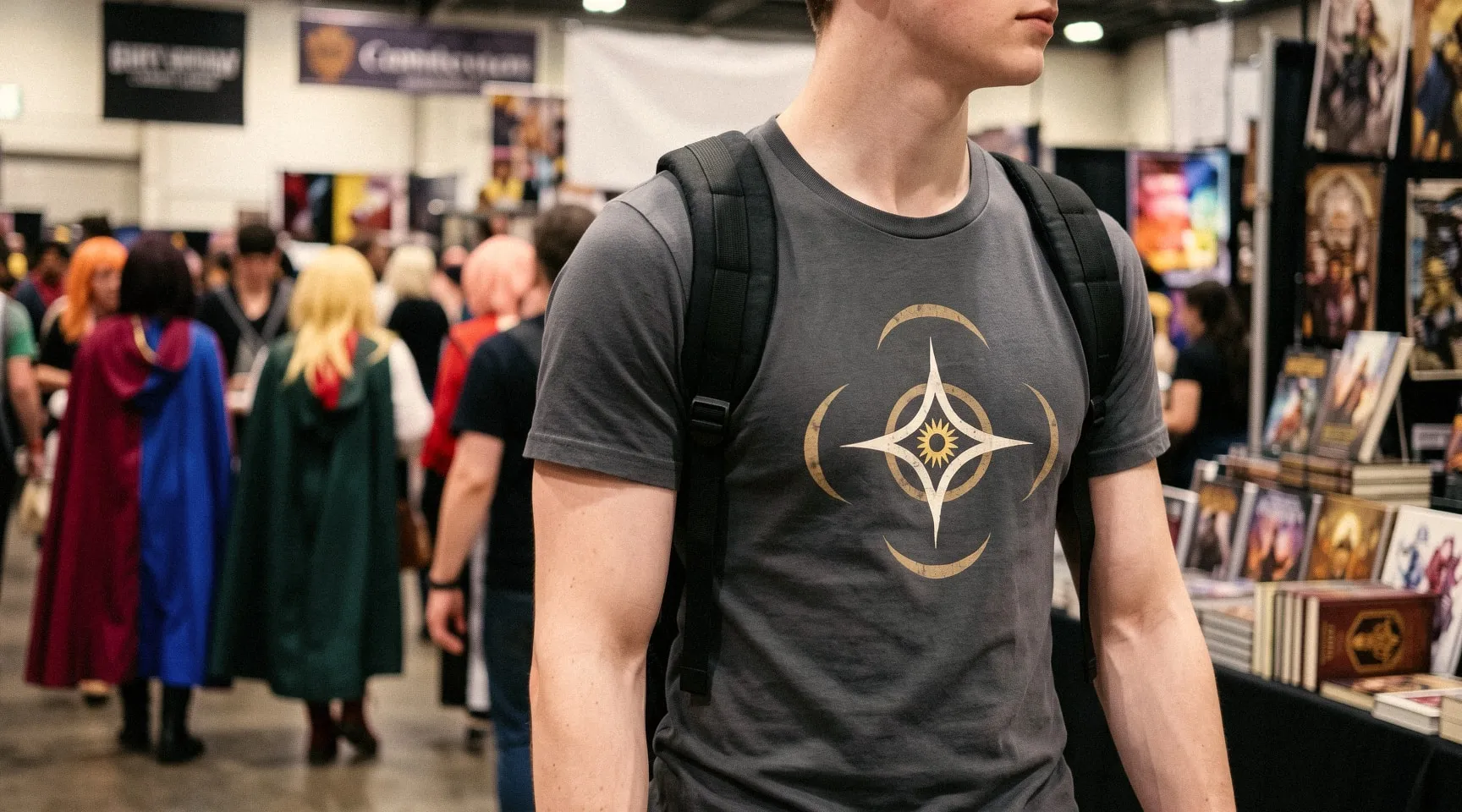
On 15 September, tens of thousands of people began reading a new novel by Brandon Sanderson, one of the best-selling writers fantasy has, that no bookshop had on its shelves, and that none would have on its shelves until 8 December. The fans had paid for it in March, and they had paid Sanderson’s own company rather than Tor, his publisher.
Publication day usually means the day a book reaches consumers through brick-and-mortar stores. The Fires of December has three: the crowdfunding backers in September, anyone with an e-reader or a pair of headphones on 6 October (when the ebook and audiobook went on sale), and the bookshops in December, with Tor’s hardcover. If you were planning to buy it for somebody at Christmas, you are, by design, the last person anyone thought to offer it to.
This is not a printing delay but a plan, set nine months in advance by one of the few writers with enough freedom and personal pull to carry it off, and that is what makes it worth watching. A bookshop that is offered a book last has to find somebody who still wants it, and whether it can says a good deal about what bookshops are for, once an author can reach his readers without them.
On the off chance you don’t know who Brandon Sanderson is, he is the American novelist behind the Mistborn and Stormlight Archive series, both of which have become fantasy classics almost within their own decade. Most of Sanderson’s books share a single universe, the Cosmere, and through most of them wanders a figure called Hoid, a storyteller who turns up at the edges of everybody else’s adventures. The Fires of December is the next in a run of standalone novels in which terrible things happen to Hoid, after Tress of the Emerald Sea and Yumi and the Nightmare Painter, and Sanderson announced it last December at Dragonsteel Nexus, his own convention in Salt Lake City.
He also announced how it would be sold: to a crowdfunding campaign in March, and anyone else from Tor “in time for the Christmas season.”
The campaign
The campaign opened on BackerKit, a crowdfunding site, in early March, built around an illustrated collection of Hoid’s fables. By 5 March it had raised $7 million from 42,000 backers, with twenty-two days still to run.
Those people paid in March for a novel that would reach them in September. That is six months in which the author’s own company held its customers’ money before handing over a single page, and the customers were delighted to let it.
I spent my youth relieving people of their money before they noticed it had gone, and I was never once paid six months in advance. I mention it only so that the reader knows I am speaking with professional admiration.
Then, before the public release, Dragonsteel gave a fifth of the book away. “We will be releasing a little over 20% of the book leading up to the ebook and audiobook release on October 6,” the company announced, and it did, two chapters a week on YouTube. Why would anybody give away a fifth of a product they are about to sell? Because the people who had already paid did not need persuading, and the people who had not yet paid did.
It has been done before, on purpose
None of this is new for Sanderson, who has almost made an art-form of selling his books.
In March 2022 he ran a Kickstarter for four novels he had written in secret. It raised $41.7 million from 185,341 backers, the most any project had ever raised on the site. The first of those novels, Tress of the Emerald Sea, went to backers on 1 January 2023, to everyone else online on 10 January, and to bookshops, in Tor’s hardcover, on 4 April.
That gap was deliberate, and Sanderson explained it at the time, at length, on his website. Print takes longer, he wrote, and supply chains are unreliable, so “we wanted to be extra, extra careful not to have these on sale too soon, lest we risk people being able to buy the books in stores before backers got their copies.” They chose a three-month delay. Tor and Gollancz, his British publisher, would release “their own editions”, but “our Dragonsteel editions will remain the premium edition of the books, which we will sell ourselves.”
Again, notice who the shop is in that arrangement: not the first place the book is sold, but the place it is sold to people who were not already customers.
The bookshop is not the first place the book is sold, but the place it is sold to people who were not already customers.
Who gets paid, and how much
The same post explains why Sanderson wanted his own shop in the first place, and the reason was audiobooks.
“Audible pays 40%,” he wrote, of the Amazon-owned audiobook service whose “dominance in the market” worried him, and “if indie authors don’t agree to be exclusive to Audible, they get dropped from 40% to a measly 25%.” By comparison, “the current industry standard for a digital product is to pay the creator 70% on a sale.” He liked the people at Audible, he said. “It’s a good company doing bad things.” So the secret novels’ audiobooks were sold directly by Dragonsteel and through rival services instead, which left the books of the most-funded campaign Kickstarter had ever seen missing from the biggest audiobook shop in the world.
Audible came to him. In March 2024 Sanderson reported that three of its senior officers had visited Dragonsteel’s offices with a new royalty structure: higher minimum rates, payment monthly rather than quarterly, and a promise to offer it to every author on the service later that year. It was not the 70 per cent he wanted, and the gap between exclusive and non-exclusive authors was “staying about the same”, but he judged that his holdout had “had a significantly positive effect”, while adding, “I don’t think I can take sole credit.” The secret novels went onto Audible, and the new model, when it came, paid 50 per cent to authors exclusive to Audible, up from 40, and 30 per cent to everyone else, up from 25.
Did the win hold? Not entirely, because there is a serious catch.
This is that the higher rate actually turns out to be paid from a pool: if a subscriber spends a credit on one book and listens to titles from Audible’s included-with-membership catalogue in the same month, that credit’s money is shared among all of them, so a bigger percentage of a smaller sum can come to less. In a livestream this October, Sanderson said that “the new terms that they promised us would be so much better are not so much better”, and compared Audible to the Star Wars villain who changes a bargain after it is struck: “It’s very Darth Vader, ‘I’ve altered the deal.’” Janci Patterson, his co-author on several books, added that independent authors have until the end of the year to accept the terms “or our books are pulled down.”
An article could be written on that story alone, but this is the short version: A storefront owned by somebody else takes a cut, and the author with enough readers to build his own storefront can decline to pay it, and can even make the storefront change its terms for everybody, though not, it turns out, keep them changed. The important thing is that Sanderson has those readers.
As for Dragonsteel? According to Emily Sanderson, his wife and the company’s chief executive, is had grown from nine employees in 2014 to around sixty by the end of 2022. (When they first registered the company, she listed her official title as Queen, which at this point is barely a euphemism, for this company is becoming a small empire.)
So who, or what, is the bookshop for?
It is tempting to say nothing, and to treat the hardcover on 8 December as a souvenir for people who like spines on their shelves. It would also be wrong, and the first secret novel shows why. Tor’s hardcover of Tress still went straight onto the bestseller lists when it reached the shops in April 2023, three months after the most devoted readers already had it.
Who bought those copies? Not the 185,341 backers. The bookshop sold to the reader who had never heard of Hoid, to the aunt looking for a present, to the browser who picked it up because the cover was good and the name was familiar. That is the customer a crowdfunding campaign cannot reach, because a campaign only finds people who are already looking for it.
It is also is why Tor’s date still matters. Sanderson’s own announcement said it: in time for Christmas. December is when bookshops sell books to people who are buying them for somebody else.
The test
Here is how to tell whether the bookshop still has a job in Sanderson’s world, or has become the last stop on a route that ends before it.
Watch the bestseller lists in the weeks after 8 December. If Tor’s hardcover of The Fires of December goes in near the top, the shop has found tens of thousands of readers that nine months of campaigning, a free fifth of the book and an October ebook did not, and it is still doing the one thing nobody else can. If it barely registers, the market was sold out before the shop opened its doors, and every author with enough readers to try it will have noticed.