



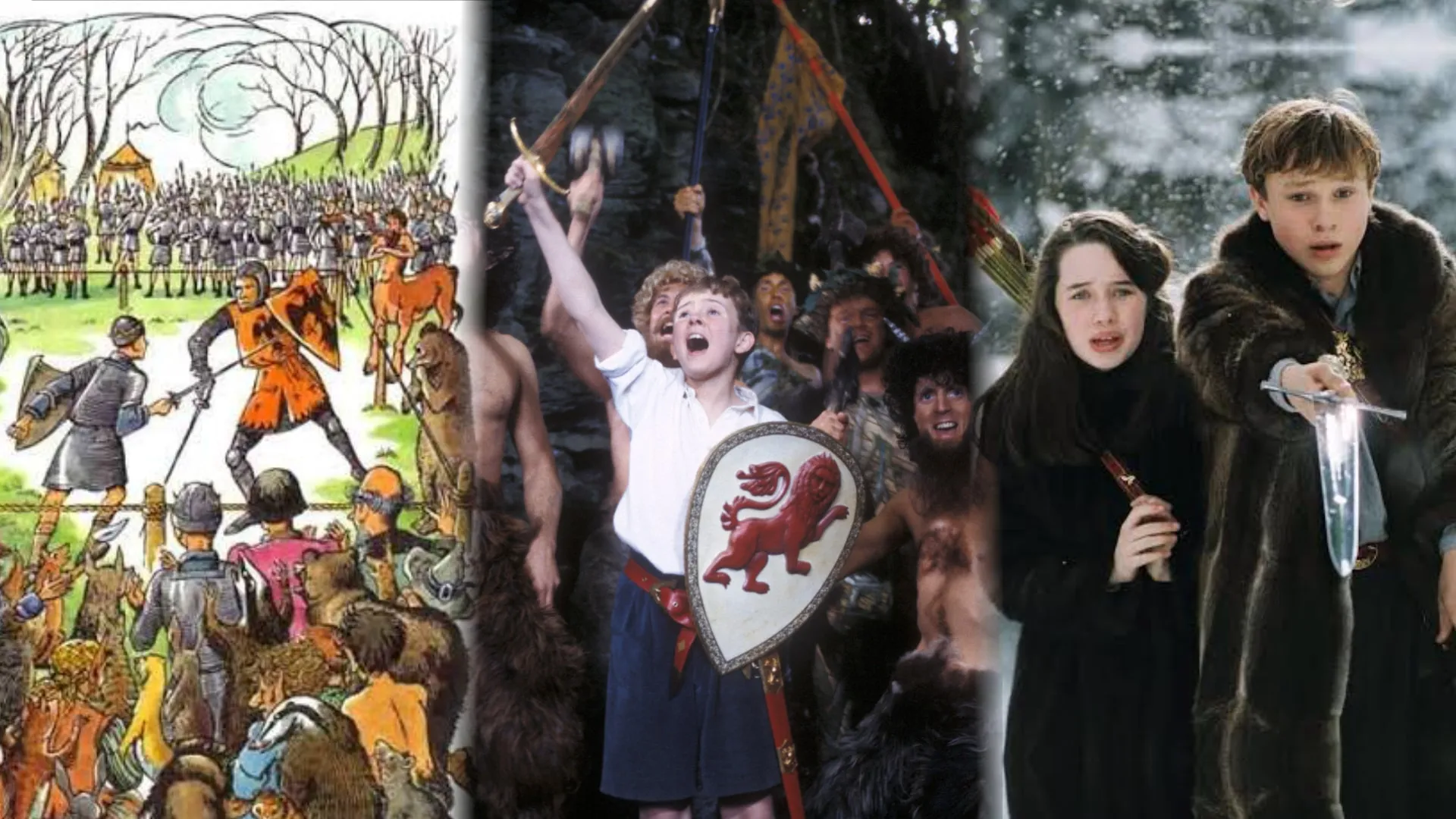
Every few years somebody buys The Chronicles of Narnia believing they have bought a franchise. They have not. They have bought seven short, argumentative, tonally unalike books by a man who was writing them faster than he was planning them, and who killed off his own cast twice. The screen record is by now long enough to be diagnostic: a beloved property that has been adapted repeatedly, competently, expensively, and has never once produced the thing studios keep going in for.
The tally is worth setting out plainly, because the story it tells is not the one people remember. The Lion, the Witch and the Wardrobe took $745 million worldwide in 2005 against a $180 million budget. Prince Caspian followed in 2008 with a budget inflated to $225 million and returns of $419.7 million. Disney walked. Fox picked up The Voyage of the Dawn Treader for 2010, trimmed the budget to $155 million, and took $415.7 million: almost exactly what the previous film had made, which tells you the audience had not collapsed so much as stopped growing. Then nothing. A fourth film, The Silver Chair, was announced in 2013, scripted by David Magee, and had Joe Johnston attached to direct by 2017. It never shot. Netflix took the rights in October 2018 and has spent seven years not releasing a Narnia film.
Three films, $1.58 billion, and the series never reached book four. That is not a failure of appetite. It is a failure of fit.
Seven books, no saga
The structural problem is the one nobody wants to name, because naming it means admitting the property was mis-bought.
A franchise, in the sense Hollywood means, needs a fixed cast ageing forward through escalating stakes. Narnia is built to defeat exactly that. The Pevensies are gone as protagonists by the fourth book. The Magician’s Nephew takes place before any of them are born. The Horse and His Boy is a side-story with an almost entirely separate cast. The books jump centuries between volumes and change genre as they go: domestic wartime fable, sea voyage, underground quest, creation myth, apocalypse. Lewis was writing an anthology. Every studio so far has tried to buy a saga, and then been surprised when the second instalment had to introduce a new king and the third had to lose two of its four children.
Compound that with the child-actor clock. Even had the box office held, the Pevensie cast was ageing out at precisely the rate the books were writing them out. The 2005 film’s greatest asset (four unknown children who were exactly right) was a depreciating one, and the series had no mechanism for replacing it.
The escalation trap
Then there is what the machine does to the material. The Lion, the Witch and the Wardrobe is a chamber piece: an evacuated house, a spare room, a fur coat, a lamp-post, a betrayal over sweets. The battle at the end is dispatched by Lewis in a couple of pages, largely off-page, because it is not what the book is about.
Adaptation reverses those weights. By Prince Caspian the budget had gone up by $45 million and the intimacy had gone down proportionally; the film opens out into siege and cavalry because that is what $225 million is for. The books get quieter and stranger as they go on. The films had to get louder and larger. Those two curves were never going to meet.
The lion in the room
And then Aslan, who is the reason the books survive and the reason the films keep missing.
The centre of Narnia is not a plot beat but a religious experience: awe, specifically, and the particular terror of being loved by something enormous that is not safe. That is a difficult thing to photograph. Rendered literally you get a very good CGI lion, and a very good CGI lion is a creature, not a numinous fact. Studios have generally solved this by demoting Aslan to a mentor-figure who arrives to fix the third act, which is the one thing he cannot be without the story collapsing into ordinary quest furniture.
The related loss is the narrator. A great deal of the pleasure of these books is Lewis himself: dry, digressive, interrupting to tell you that Edmund was becoming a nastier person or that this is the sort of thing that happens if you shut yourself in a wardrobe. Take that voice out and the plots underneath are surprisingly thin. Nobody has yet found the cinematic equivalent, and the BBC serials of 1988–1990, in all their low-fi glory, at least knew the tone they were reaching for.
There is also an ending problem the series has never had to face on screen, because it has never got that far: Susan, left outside at the end of The Last Battle. The received reading is that Lewis punished a girl for growing up, and it is worth saying plainly that this is a misreading. His complaint is not that Susan wears lipstick; it is that she has traded a real thing for a fashionable one and calls the trade maturity. Whether an adapter can dramatise that distinction is a genuine question. Whether one will try is a different one.
The next attempt, and why it is different
Which brings us to Greta Gerwig, Netflix, and a reported $280 million.
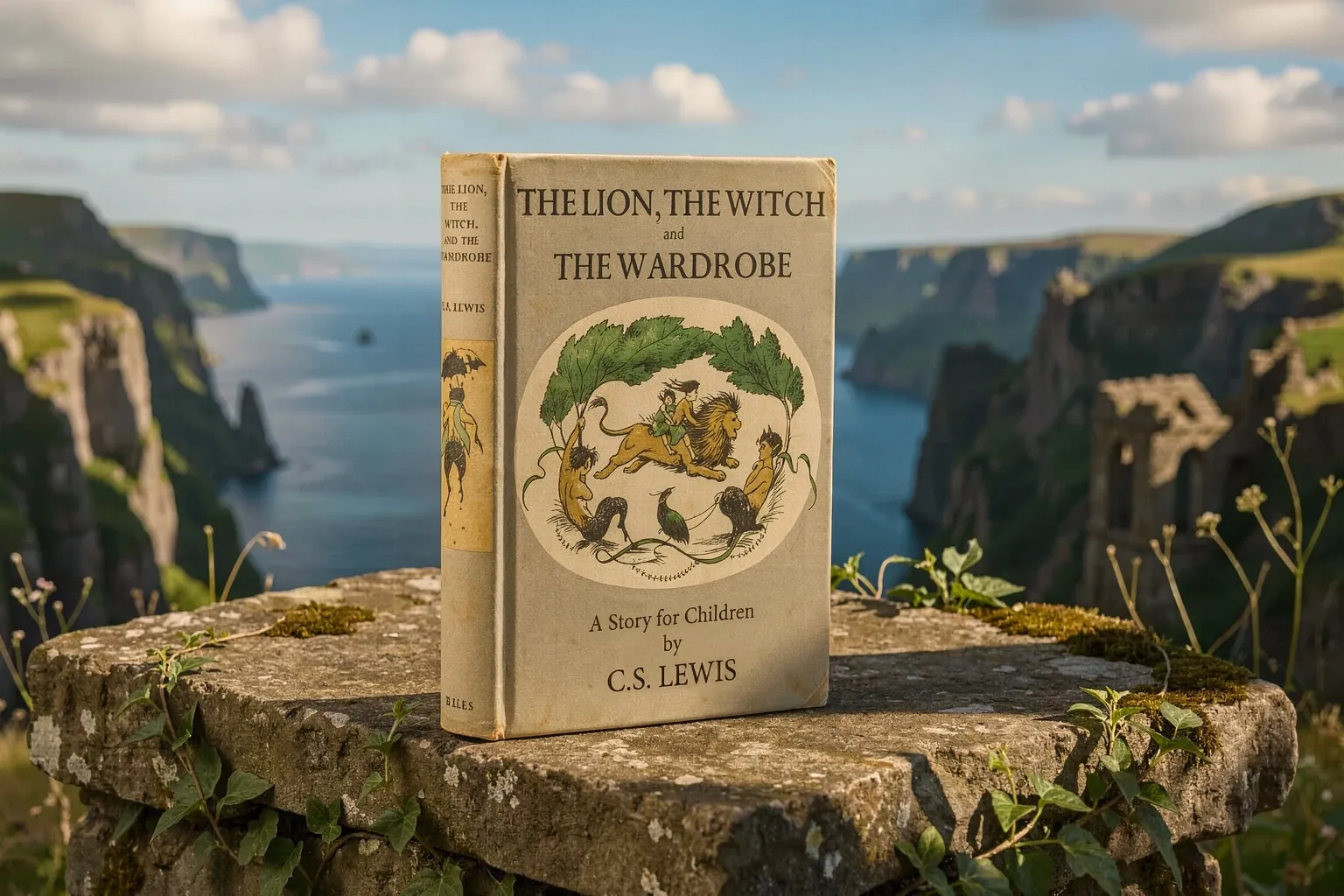
The first genuinely interesting decision has already been made: she is starting with The Magician’s Nephew. Not the wardrobe. The creation story: Digory and Polly, the rings, the wood between the worlds, the dead city of Charn, Jadis loose in Victorian London, and a lion singing a country into existence. Chronologically first, published sixth, and the strangest book in the set.
Read cynically, that is a hedge: no wardrobe means no comparison to the scene everyone can already picture. Read generously (and I think generously is right), it is the first time an adapter has treated the anthology structure as a feature. If the books do not share a cast, stop pretending they do, and make each one its own film with its own tone. That is not a franchise plan. It is a shelf, which is what Lewis actually wrote.
The signals are mixed in the interesting direction. Cinematographer Seamus McGarvey has described it as “the biggest budget hand-knitted project,” which is either a promise or a warning depending on your mood. Emma Mackey plays Jadis, with Carey Mulligan, Daniel Craig and Kobna Holdbrook-Smith around her, and newcomers David McKenna and Beatrice Campbell as the children.
Then there is Aslan, who has been reported everywhere as being voiced by Meryl Streep. That report has never been confirmed. It began as a Deadline item in April 2025 saying Streep was in talks and not yet at the offer stage, and sixteen months later that is still the whole of the evidence. When Netflix named ten cast members in May, it gave characters to the others and left Streep’s line blank. She is in the film. What she is playing has never been stated.
There is a decent case that it is somebody else. Emma Mackey has described acting alongside Streep, Carey Mulligan and Daniel Craig, which suggests a part played on a set rather than in a recording booth; the obvious one going spare is Aunt Letty, Uncle Andrew’s sister. Ciarán Hinds, cast in May and still unassigned, has the lower voice and the record in animated fantasy.
Suppose the report is right, though, since everyone arguing about it has assumed so. If Streep is voicing Aslan, it is worth being precise about why that gives one pause, because the objection is not the one usually assumed. Streep is a formidable actor and could plainly deliver the authority the part needs. The difficulty is that Aslan is not a character Lewis invented and then decorated with meaning afterwards. Lewis was a Christian apologist by trade, and he said about as plainly as an author can that Aslan is what Christ might be in a world like Narnia: the same figure, differently clothed. The masculinity of that figure is not incidental colouring. It is the referent.
It would also sit awkwardly beside Gerwig’s own stated ambition. “As a non-British person, I feel a particular sense of wanting to do it correctly,” she told Variety: “it’s like when Americans do Shakespeare, there’s a slight feeling of reverence and as if maybe we should treat it with extra care. It is not our countryman.” That is exactly the right instinct, and I would rather have a director who feels it than one who does not. But reverence that extends to the Englishness of the material and not to its theology would be reverence with a gap in it, and the gap is in a load-bearing wall.
And it would break with the entire screen history of the character, which is worth stating precisely because the casting has been discussed as though it were both settled and routine. Every Aslan yet filmed has been voiced by a man: Stephen Thorne in the 1979 animated version, Ronald Pickup in the BBC serials, Liam Neeson across all three Walden films. Forty-seven years, three productions, no exceptions.
The defence that it is simply a ‘creative reading’ would have to contend with the shape of the choice. Recasting a role across sex is one thing when the role’s sex is incidental: a scholar, a bureaucrat, a rival. It is a different thing when the figure is a deliberate stand-in for the Christian God, written by the twentieth century’s most-read Christian apologist, and when the director is one of the most prominent feminist filmmakers working. Gerwig’s Little Women and Barbie are not neutral objects; they are films with an argument. Nobody has to impute a motive to observe that this decision sits comfortably inside a body of work with a consistent one, and that a great many viewers will read it exactly that way on sight.
Which leaves the problem the film would not then be able to avoid. A great many readers would receive the choice as a fashionable one, and fashionable is the single worst thing a rendering of Aslan can be: the whole effect of the character depends on his not being answerable to us.
Either way, sixteen months of argument have attached themselves to a casting that may not exist, in a production that had every other reason to be given the benefit of the doubt. One sentence from Netflix would have ended it at any point in those sixteen months. None has come.
The adapter is not a neutral instrument
Which brings up another thing that has gone oddly unexamined in the coverage. Adaptation is not a transcription. It is a reading, performed by somebody, and it is fair to ask what sort of reader has been engaged.
Gerwig’s last film before this was Barbie: the highest-grossing release of 2023 and about as thesis-driven as a studio picture gets. The most argued-over thing in it was its handling of the Kens: men written as vain, dim and insecure, and actively dangerous the moment they acquire any power. Her defenders answered that the target is patriarchy rather than men, and that the Kens’ own arc shows the system deforming them too. That defence may have some substance, but it was also delivered with a kind of glee that many (rightly) felt was the symbolic substitute for a middle-finger.
Whichever reading you take, nobody left Barbie uncertain what the film thought about the sexes.
Now set that beside the material. Narnia is a devotional work by a Christian apologist, and its moral architecture is frankly hierarchical: ordered, chivalric, and not egalitarian in any sense a modern reader would recognise. Father Christmas hands Peter a sword and Susan a bow, and tells her that battles are ugly when women fight. Lucy is vindicated because she believes without arguing. Aslan is not a metaphor for something the reader may substitute at will; he is the Christian God with a mane, and the books ask to be read on those terms.
A modern feminist reading would find a great deal here to object to. The person adapting it has spent a career making precisely that reading.
The worry is not that she will be careless with it. It is that she will be careful with it, in the service of a different argument.
It is tempting to see something deliberate in the pairing: a beloved artefact of conservative Christian imagination handed to the director least likely to leave it alone. A duller explanation is possible: that Netflix simply wanted whoever made Barbie, and the theology never came up as a consideration at all. But that is very difficult to believe.
And this is where the usual reassurance stops working. Little Women is offered as proof that Gerwig can adapt a much-loved classic without condescending to it, and it is proof of exactly that: she took an episodic, sentimental children’s book apart and reassembled it into real cinema. But Alcott was already congenial to her. The restructuring served a reading of Jo and the marriage plot that Alcott herself half-invited; there was no tension between what the adapter wanted to say and what the book was for. That test was passed on easy ground.
Narnia is the hard ground. It is the case where fidelity and conviction genuinely pull against each other, and where doing it “correctly” (using her own word) means letting a book mean something she may not believe. That is a real and difficult thing to ask of any artist, and the honest answer is that, given the last two decades of re-invention, re-interpretation, deconstruction and adapting ‘for a modern audience’, that outcome seems about as likely as Aslan striding into my living room tonight. All we can say, is that the legacy this film writes may rest on a casting call its studio has not confirmed and that the silence has been left to do its own work.
The release has already moved once: from an IMAX-only Thanksgiving 2026 window to a full theatrical run on 12 February 2027, IMAX previews from the 10th, and Netflix on 2 April. A studio that was frightened of its own film would have done otherwise, so perhaps, once more, we simply have to sit tight and see what hits our eyeballs.
What would count as success
Not a franchise. That is the trap, and it has now closed on four separate studios.
The measure should be whether a single Narnia film can be so completely itself that the question of the next one becomes interesting rather than contractual. The Magician’s Nephew is a good test precisely because it cannot lean on nostalgia: there is no wardrobe, no Turkish delight, no four children on a train platform. It has to work as a film about a boy, a dying world, a very bad uncle, and the noise a lion makes when it is making things.
If that lands, the shelf can be worked through in any order anyone likes from here on out. If not, the lesson will be the same one available since 2010, still unlearned: Narnia is not too strange for the screen. It is simply not a saga, and every attempt to sell it as one has ended in the same place: a good first film, a bloated second, a third that quietly breaks even, and silence.
But there is another way to fail. If Streep is speaking for the lion, everything above stands, and the film will have handed its critics their argument before a frame of it was seen. If it is not (and Hinds has quietly held the part all along, or somebody else), then it would mean that a strange, difficult, thoroughly unfashionable book had been handed to a filmmaker who served it reverently: that somebody with every invitation to make Narnia argue with itself had instead let it say what it says, just as the book has done for over seven decades.
Should that be the case, it would be the best news this series has had in twenty years, and this paper would be delighted with it.