



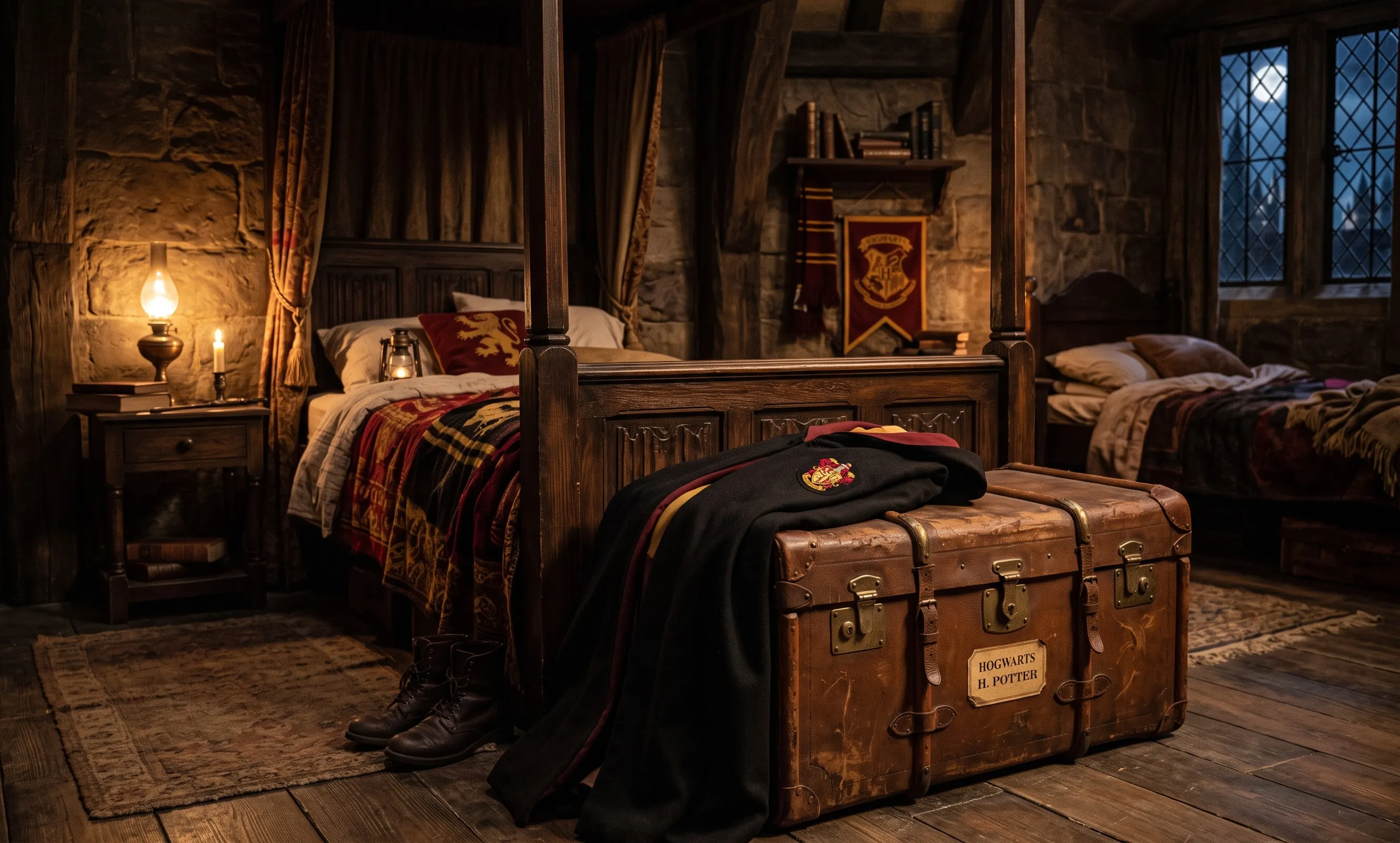
Deathly Hallows went on sale in July 2007. Its twentieth anniversary falls next summer, and the strange thing about writing that sentence is how little the intervening period has managed to move on. A reader who fell asleep in 2007 and woke this morning would find the bookshelf arranged the same way, fans still watching the original movies, and merchandise still on sale (albeit broadened substantially to include everything from cookies to bumper-stickers). The real surprise would be that a ten-year-long television adaptation is about to begin.
As a reader, a fan, a general nerd, Harry Potter still holds a special place in my own bookshelf, and the movies have been watched more times than I care to admit. So the question I keep asking myself is; will the reboot take a place alongside them? And do I need it to?
The market it built
The commercial success of Harry Potter is still staggering to behold. The number of young-adult titles published annually rose roughly tenfold between 1997 and 2009, which is not so much a trend as a whole new wing in the castle.
Pre-Potter (or ‘PP’, in historian-vernacular), “children’s fantasy” was a modest, mostly unloved category with a handful of reliable sellers. Afterwards, it was where the money was. His Dark Materials found a mass readership it might otherwise have been denied. Percy Jackson, Twilight, The Hunger Games: every one of them was commissioned into a market that Rowling had proved existed. Whole careers were made possible by a demonstration that children would read six hundred pages if the six hundred pages were compelling enough. Then the industry concluded that everything should be six hundred pages, and in seven parts. The Wizengamot is still out on whether that’s a positive or not…
Another effect was the permanent breaking of age segregation. The “adult edition” with the sober cover was a publishing innovation based on pure embarrassment management, and within a decade that embarrassment had shrivelled. That is the change I would highlight most warmly. An adult reading a children’s book in public is now unremarkable, and the genre is richer for the traffic.
…children would read six hundred pages if the six hundred pages were compelling enough. Then the industry concluded that everything should be six hundred pages – and in seven parts.
The habits it left
With success comes consequences, however, and these are subtler and not always beneficial.
Everything became a series. The single most durable structural legacy of Harry Potter is that a standalone fantasy novel is now a harder sell than a ‘first-of-seven’ with a map and an appendix. Rowling was not the first to create a fantasy series, of course, but publishers now require multi-novel arcs and a ‘universe’ for books that could reasonably have been one and standalone. Readers are trained to expect them. An enormous amount of barely adequate middle-volume is the direct result.
The chosen one hardened into a default. Again, Rowling did not invent it, but she made it the keystone of the most successful children’s series ever written, and a generation of acquisitions followed. This periodical has recently been rather forthright about prophecy elsewhere and I will not repeat the argument, except to note that the boy with the scar still stands above most of the prophecy-kids out there.
The magic school became a genre. Not a setting: a genre, with its own shelf, its own conventions and its own diminishing returns. Some of it is excellent. Most of it is Hogwarts with the serial numbers filed off and the tuition raised. A genuinely good standout is Lev Grossman’s The Magicians - though it dispensed with reverence for the genre in favour of making it lewd and bloody and self-ridiculing. In a loving way. Take it or leave it.
And fandom became a marketed identity. The fault here does not lie with the readers, who are perfectly entitled to find sorting a superb narrative device. After all, it tells you something true about a character in a single scene, and it hands the reader a question about themselves. The trouble is what the trade learned to do with the question. Pottermore opened for registration on 31 July 2011 with a sorting quiz written by Rowling herself, and to take it you had to make an account. The Hat had become a login, and it sold readers a wand afterwards. Divergent uses the plot itself is an aptitude test and a choosing ceremony. Abnegation, Amity, Candor, Dauntless, Erudite. Five clean adjectives which HarperCollins used in a “discover your faction” quiz, only to ship a box set with faction manifestos in it to readers. A Court of Thorns and Roses used courts instead of houses, and utilises an entire subscription-box industry (FairyLoot, Illumicrate, OwlCrate) to post readers a piece of their ‘court’ every month. Fourth Wing sorts cadets into quadrants: Riders, Scribes, Healers, Infantry. “Riders Quadrant” is now a category on the licensed merchandise stores.
What this means is that books now arrive with a faction system fitted at the outline stage, because a story that sorts its audience can be sold to that audience before it has been written.
The complication
Still, none of the above is what most readers mean now when they ask how the legacy is holding up.
Rowling’s views on sex and gender have made her, for a section of the readership, a writer they would rather not be seen reading. For another section, it’s the opposite; she’s become a champion of honest, open criticism and standing up for what one believes in. There is a slight irony in the fact that we love and admire many of the characters in her books for exactly the same reasons.
But whatever your views, it is our opinion that the practice of reading an author out of their own work is a poor habit, and a new one. It asks a reader to consult a writer’s opinions before consenting to be moved by their sentences, which is a demand no serious reader has ever met: not with Kipling, not with Wagner, not with any of the long list of people whose politics were worse than a Twitter argument. A book is not a referendum on its author, and treating it as one costs the reader far more than it costs the creator.
Nor (strange that it needs to be said) is abandoning or persecuting our fellow human beings simply because their views differ from our own particularly wise. To do so has, historically, led to very dangerous and precarious situations. Many a prominent enlightenment intellectual giddily read the works of their political, cultural, or social adversaries, simply because they wished to understand another point of view before shovelling it onto the proverbial dung-heap. There is such a thing as agreeing to disagree, and perhaps that’s a concept we can all agree on.
Anyway, what can be said flatly is that the question will be attached to every piece of coverage the new series receives, and that HBO has settled it institutionally by keeping Rowling on as an executive producer. Whatever else that is, it is a decision, taken with open eyes.
Ten more years of it
Which brings us to Christmas Day, 2026.
The series arrives on 25 December (pulled forward from an original 2027 date) with Francesca Gardiner as showrunner, Mark Mylod directing, and one book per season across a projected ten consecutive years. Season one is eight episodes of Philosopher’s Stone. Season two was greenlit back in May and begins filming this month, before anybody has seen a frame of season one. Hans Zimmer is scoring. They built a temporary school at Leavesden for up to six hundred child actors, on the same lot where the films were shot.
The trailer took 277 million views in forty-eight hours, the biggest in HBO’s history. To say the least, the appetite for this series is not in question. We are all sitting at the literary banquet table, and the house-elves are about to serve-up.
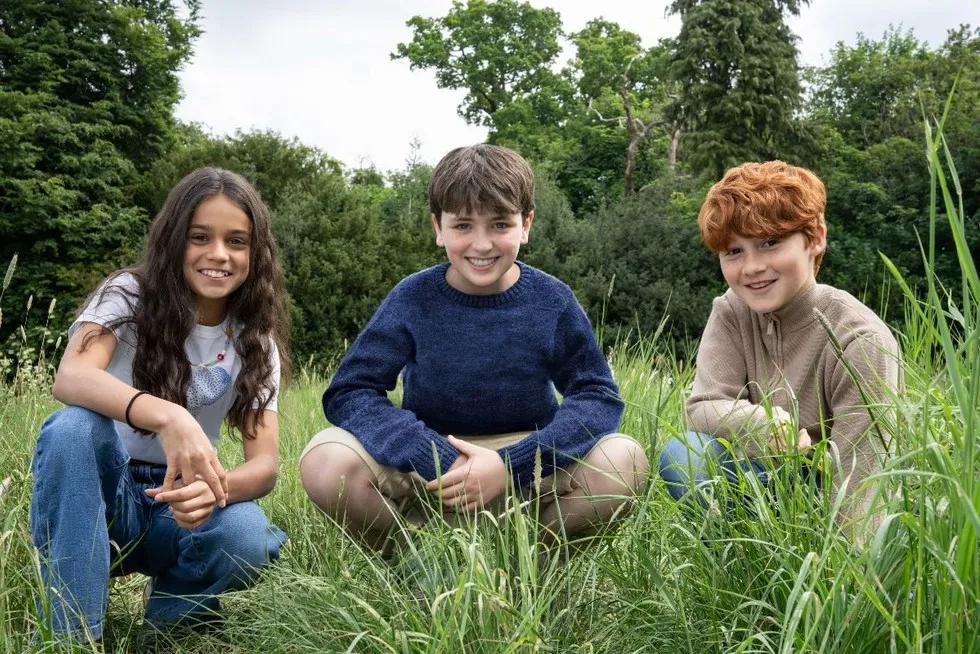
The case for the format is real. The films were a triumph of compression and lost enormous amounts: the whole texture of school life, most of the supporting cast’s interiority, and by the later instalments any scene that was not carrying it the required narrative drive. Eight hours a book restores room for the thing the books were actually best at, which was not plot but institution: a school with lessons in it, staff politics, a sport nobody can explain, and a long slow accumulation of ordinary days that made the extraordinary ones land. We’ll get to see Harry having his hair cut by Petunia. Students lounging by the lake on a sunny Scottish day. Strangely, that could be truly magical.
Of course, the case against is that this is a decade-long re-run of a story the culture already knows by heart, produced by a studio that needs a tentpole, at a moment when the genre would be better served by finding the next thing.
Ten years is also a very long time to ask of child actors. John Lithgow, cast as Dumbledore, will be well into his nineties by the final season. The production has already had to restructure its shooting days around education law and, reportedly, to overhaul conditions on set.
Oh, and one more thing which should be said plainly: Paapa Essiedu, cast as Snape, received awful abuse and even death threats when news broke of the casting decision. We can argue about fidelity and expectation and logic as much as we like (those are ordinary things for readers to argue about), but sending threats to an actor for taking a job is not criticism, nor fandom, nor anything resembling decent human behaviour.
Personally, I think that this casting choice was a silly idea, for not only are there already many characters-of-colour in the original story with prominent roles, but this change will require substantial massaging of Snape’s backstory and circumstances (not to mention, I really don’t want to watch a black kid getting bullied and hung up on a tree branch by a bunch of white kids…do you?).
However, this is the choice they’ve made, and no matter the issues we have with that, all of us should stand firmly against mistreatment like this.
Blaming Essiedu for going for a role he wanted to play and getting it is both pathetic and also missing the point. It is hard not to suspect a deliberate choice by the studio here, made for one reason; to create drama and attention ahead of the release. Gender/Race/whatever-swapping is old-hand for Hollywood now. They’ve been doing it for over a decade, safe behind their invisibility cloaks and knowing that even if they’re doing it for nefarious reasons, anyone who criticises it will be chastised by a certain segment of society for completely different reasons.
The upshot is this; being genuinely awful will change nothing, and for the more sensible of us who simply don’t love the choice, the best approach is to ignore it for now and see what happens. I’m sure Essiedu will be excellent, and it’s a pity they didn’t give him a role that was less contentious.
What I would watch for
Not the spectacle. The spectacle is guaranteed and will be very good.
The interesting question is whether an adaptation this long can resist the pull of the ending. The books get darker and larger, and the last three are essentially war novels. A television series with ten years to fill and a known destination will be under permanent temptation to foreshadow: to make every early season a delivery system for the finale, which is precisely the mistake the source material mostly avoided.
Philosopher’s Stone is a small book about a neglected child finding a place where he is wanted. If the show can be that, for eight hours, without winking at what is coming, it will have earned the decade.
If it cannot, we will have spent ten years watching the culture confirm something it already knew, which, as this paper has observed before, is what prophecy does to a story.